




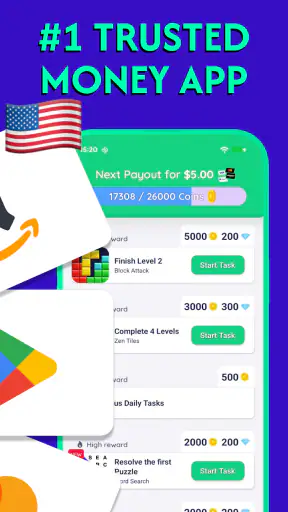


I approached TesterMAX: Money & Gift Cards as an entertainment app with a practical question in mind: can it fit comfortably into everyday spare time, including for people who need a simple, readable experience? Its basic idea is easy to understand. Loyalty Gaming presents it as a place where you play, explore opportunities for rewards, and look for coupons, deals, or extra cash rather than paying an upfront fee. That makes it more approachable than many entertainment apps, although the value depends heavily on how patiently you use it.
The app is free, aimed at Everyone, and has reached more than a million installs. Its average score is 4.4 from roughly eighty-four thousand ratings, with about twelve thousand written reviews. Those figures suggest that it has found a substantial audience, but they do not remove the need to judge the experience for yourself. Reward apps can feel very different depending on your phone, your reading needs, your available time, and how comfortable you are navigating offers.
How TesterMAX feels to use in ordinary situations
Readability and navigation come first
My first impression is that the concept is easier to grasp than the reward economy behind it. Playing for entertainment is familiar, while deciding which activity is worth your attention requires more care. I would not open it expecting a single, traditional game with one clear progression path. I would treat it as a reward-focused entertainment hub, where the important task is understanding what each opportunity involves before spending time on it.
That distinction matters for readability. A person can recognize the broad purpose quickly, but reward screens often require careful reading of conditions, progress information, and the action needed to qualify. I recommend slowing down instead of tapping through every screen. Look for the description of an activity, identify what completion appears to require, and only then decide whether it suits your schedule. This simple habit reduces the chance of beginning something that demands more attention than expected.
I also found that a clean personal routine helps more than repeatedly browsing without a plan. I would check the available opportunities, choose one that matches a short break, and return later to see whether progress has changed. That is more manageable than trying to pursue everything at once. It also makes the app less mentally cluttered for people who prefer predictable steps.
For readers who have difficulty with small text, dense screens, or fast-changing visual information, the experience may depend on the phone’s own display settings. Increasing system text size, using a brighter or higher-contrast display setting, and keeping the phone at a comfortable distance can make reading less tiring. These adjustments are not special features of the app, but they are practical ways to make an ordinary Android session easier to follow.
The app supports Android devices beginning with version 7.0, which gives it a broad potential device range. Its current version is 33, and the developer is Loyalty Gaming. I would still judge the experience on the particular phone in hand rather than assuming that every screen will feel identical across older and newer hardware. A smaller display can make reward details more demanding to inspect, while a newer phone may make switching between screens feel smoother.
Motor and sensory considerations
From an accessibility perspective, the most useful approach is to separate the app’s physical interaction from its mental workload. Tapping through an entertainment app may be straightforward for someone with limited dexterity, but repeated selection, scrolling, or precise touch targets can become tiring. If your hands fatigue easily, short sessions are likely to be more comfortable than trying to complete a long sequence in one sitting.
I would also avoid using it when accuracy is difficult because of movement. On a bus, while walking, or during a rushed break, it is easier to miss a button or overlook an important condition. A stable surface and a few uninterrupted minutes make the experience more forgiving. This is especially relevant when the reward depends on completing an activity correctly rather than merely opening the app.
People who are sensitive to bright screens, animation, or notification interruptions may prefer to adjust the phone before starting. Lowering brightness, enabling a warmer display mode, and muting nonessential alerts can make a short session less intrusive. I would not describe those controls as built-in accessibility tools; they are device-level adjustments that can improve comfort when the app is used in different sensory environments.
For users with hearing loss, visual information is particularly important. I would not rely on sound as the reason to use the app, and I would keep an eye on the screen rather than assuming an audio cue will communicate everything. Conversely, someone who finds visual concentration difficult may prefer using it for very brief periods and stopping as soon as reading becomes tiring. The app is more suitable for flexible, self-paced attention than for users who need every interaction to be effortless.
A useful tactic is to hold the phone in the position that requires the least reaching. If one-handed use causes accidental taps, switching to two hands or placing the device on a table can help. I also recommend taking a screenshot or making a brief note of an important requirement only for personal reference, so you do not need to repeatedly search through the same screen. That workflow is particularly helpful for anyone who finds repeated navigation tiring.
Situational access in real life
The strongest use case is a small pocket of free time. Imagine waiting for an appointment, sitting at home after dinner, or taking a quiet break between errands. I would open TesterMAX then, review the available choices, and select something that fits the time I actually have rather than promising myself a long session. That makes the reward aspect feel like a bonus attached to entertainment, not a second job.
It is less convincing when used under pressure. If you need guaranteed money quickly, this is the wrong mindset. The app’s appeal is the possibility of collecting value while spending leisure time, not replacing dependable income. I would never plan a bill around a reward app, and I would be cautious about continuing an activity solely because I have already invested time in it.
For someone with variable energy or concentration, the ability to stop and return later is important. I would divide use into small sessions: inspect the options when alert, play only while comfortable, and leave the rest for another day. This is a better fit for fluctuating schedules than a system that demands a fixed daily commitment. It also prevents the app from taking over time that could be spent on a more rewarding activity offline.
Parents and families should remember that an Everyone age rating describes the intended content audience, not a promise that every reward decision is suitable for unsupervised children. I would still help a younger user understand what they are tapping, especially when an offer involves moving beyond ordinary play or making a decision about personal information. Adults should remain responsible for account choices and any redemption process.
Compared with ordinary entertainment alternatives, the app adds a possible practical benefit but also adds more reading. A casual game may let you start playing immediately, while a streaming app gives you a predictable viewing experience. TesterMAX is better for someone who enjoys sampling activities and is willing to check requirements. It is worse for anyone who wants instant entertainment without promotional context, progress conditions, or reward-related decisions.
Compared with other reward platforms, its appeal is the combination of play, coupons, deals, and extra-cash possibilities in one entertainment-oriented place. The trade-off is that the user has to judge the quality of each opportunity rather than expecting every option to be equally worthwhile. My advice is to measure value by enjoyment plus realistic effort, not by the most attractive possible reward shown on a screen.
Where the experience still creates barriers
The biggest barrier is not necessarily tapping; it is comprehension. A reward app can be visually simple and still be demanding if the user must compare conditions, remember steps, or decide whether progress is worth the time. Someone with dyslexia, attention difficulties, or limited English confidence may need extra time to interpret each opportunity. Reading slowly and choosing only one activity at a time can help, but it does not remove that underlying burden.
Another barrier is uncertainty about personal value. Two people can use the same app and reach very different conclusions because they have different patience levels, device performance, and interests. I would not call the app a good choice for a person who dislikes trial and error. If you want a clearly defined entertainment product with no reward qualification to think about, a conventional game or video service will probably feel more comfortable.
Older phones may also make the experience less pleasant, particularly when a smaller screen forces more scrolling or when switching between activities feels slow. I would keep the operating system updated where possible, close unnecessary apps before a session, and avoid judging the concept after only one awkward interaction on an aging device. At the same time, users with limited hardware should be realistic: convenience is part of the value, and too much friction can cancel out the appeal of a small reward.
Privacy and account awareness are important with any app connected to rewards. I would read each request carefully, avoid granting access that does not seem relevant to the intended use, and never rush through a screen merely because it promises a benefit. If a person is uncomfortable evaluating permissions, offers, or redemption steps, they may be better served by an entertainment app with a simpler purpose.
I also think the design is not equally inclusive for every context. Someone who can see small text, tap accurately, and concentrate without interruption may find it easy to explore. Someone using assistive technology, dealing with fatigue, or relying on strong contrast may need to adapt the phone and take more frequent breaks. Because those needs vary so much, I would test a short session first rather than committing significant time.
Who will enjoy it, and who should skip it?
I would recommend it to people who already enjoy casual mobile entertainment and like the idea of making spare time feel slightly more useful. It suits patient users who read before starting, keep expectations modest, and are happy to stop when an activity no longer feels worthwhile. The free entry point makes experimenting less intimidating, and the Everyone rating makes it broadly approachable from a content standpoint.
I would be more cautious recommending it to anyone seeking reliable income, immediate cash, or a completely distraction-free interface. It is also not my first choice for people who become frustrated by promotional wording or who need a very direct path from opening an app to finishing one task. For those users, a regular game, a coupon app focused only on shopping, or a straightforward entertainment service may be a better match.
One practical method is to set a personal limit before opening it. I might decide to spend only a short break exploring, then stop regardless of whether I have found an appealing option. This prevents sunk-cost thinking, where time already spent makes an uninteresting activity seem impossible to abandon. I would also compare the enjoyment with the effort afterward, because the real question is not simply whether a reward exists, but whether the whole session felt worthwhile.
My inclusive verdict
TesterMAX: Money & Gift Cards is an approachable entertainment app with a practical twist, but its strongest audience is not everyone who wants money. It is for people who enjoy browsing play-based opportunities, can read conditions carefully, and are comfortable treating rewards as an extra rather than a promise. I like that the concept can fit short breaks and that the free model lowers the barrier to trying it.
My balanced view is that accessibility here depends as much on the user’s situation as on the app itself. Larger text, a stable setting, short sessions, and a deliberate one-option-at-a-time routine can make it easier for people with visual, motor, attention, or sensory needs. Those adjustments are useful, but they cannot eliminate the mental effort involved in understanding reward activities.
Loyalty Gaming’s app is therefore worth trying if you want entertainment that may add coupons, deals, or extra value to your spare time. I would approach it calmly, protect my attention, and stop using any opportunity that feels confusing or physically tiring. The best reason to use it is that the activity is enjoyable first, with any reward treated as a welcome extra.


